

CSL DualCom Alarm Signalling Installation and Support
Professional alarm signalling for monitored fire and security systems using CSL DualCom technology, with resilient single path and dual path connectivity selected around the required signalling grade.
- CSL listed as a brand partner
- Dual path signalling options
- Fire and security applications
- Monitoring handover support


What does CSL DualCom do?
CSL DualCom transmits alarm events from compatible fire or security control equipment to an alarm receiving centre. Dual path GradeShift Pro options use two independent communication paths so signalling can continue if one path fails.
Alarm detection is only useful if the required signal reaches the right response route.
CSL signalling can form part of a monitored intruder or fire alarm system where the selected product, grade and alarm receiving centre arrangement are appropriate.
Explore monitored alarm servicesCSL provides critical connectivity and alarm signalling products for fire and security systems. The DualCom Pro range includes single path and dual path solutions.
GradeShift Pro 2 can use two radio paths or a LAN and radio combination. CSL states that each SIM on the Radio and Radio version operates on an independent network for resilience.
The device connects to compatible alarm control equipment and forwards alarm conditions to the alarm receiving centre through CSL's signalling infrastructure.
Choose the signalling path around the required risk and grade.
The correct signalling product depends on the alarm system, monitoring requirements, available connectivity and applicable grade.
Radio signalling
Use managed cellular connectivity where a radio signalling path is appropriate.
LAN signalling
Use a compatible customer network connection as part of the selected signalling arrangement.
Dual path signalling
Use two independent paths to improve resilience where the required grade calls for it.
Fire signalling
Compatible DualCom products can be used for fire alarm transmission when selected and installed for the application.
Security signalling
Transmit intruder alarm events from compatible Grade 1 to Grade 4 systems depending on product and installation.
Remote management
CSL Live and My Base support installer management and selected remote service functions.
Alarm panel to signalling device to ARC to response.
The signalling device sits between the protected premises alarm system and the alarm receiving centre.
Signalling installation, upgrades, testing and handover.
We can incorporate supported CSL signalling into new monitored systems or review signalling during a maintenance takeover.
New signalling
Select and install the signalling path appropriate to the alarm and monitoring requirement.
Signalling upgrades
Review legacy signalling and replace or regrade supported equipment where required.
ARC handover
Coordinate supported monitoring changes to reduce gaps during a provider transition.
Testing and maintenance
Test alarm transmission, path failure and system reporting as part of the agreed service.
The signalling handover should not create a gap in cover.
We can review the existing alarm signalling route, current monitoring arrangement and supported control equipment, then plan the changeover around continuity of alarm transmission.
From signalling survey to tested alarm transmission.
Survey
We review the site, existing equipment, risks and the result the system needs to deliver.
Specify
We define the equipment, configuration, interfaces and signalling or monitoring requirements.
Install
Our engineers install, configure, test and commission the system.
Support
We explain the system and discuss ongoing maintenance, faults, upgrades and future expansion.
Official CSL DualCom product information.
Use these manufacturer sources for product specifications, compatibility and current range information.
CSL DualCom signalling questions.
DualCom is CSL's professional alarm signalling range used to transmit fire or security alarm events to an alarm receiving centre.
GradeShift Pro 2 is CSL's dual path signalling solution. It can use two radio paths or a LAN and radio combination depending on the selected variant.
Dual path signalling provides two communications routes so the system can report a path failure and continue using the remaining path, subject to the selected grade and installation.
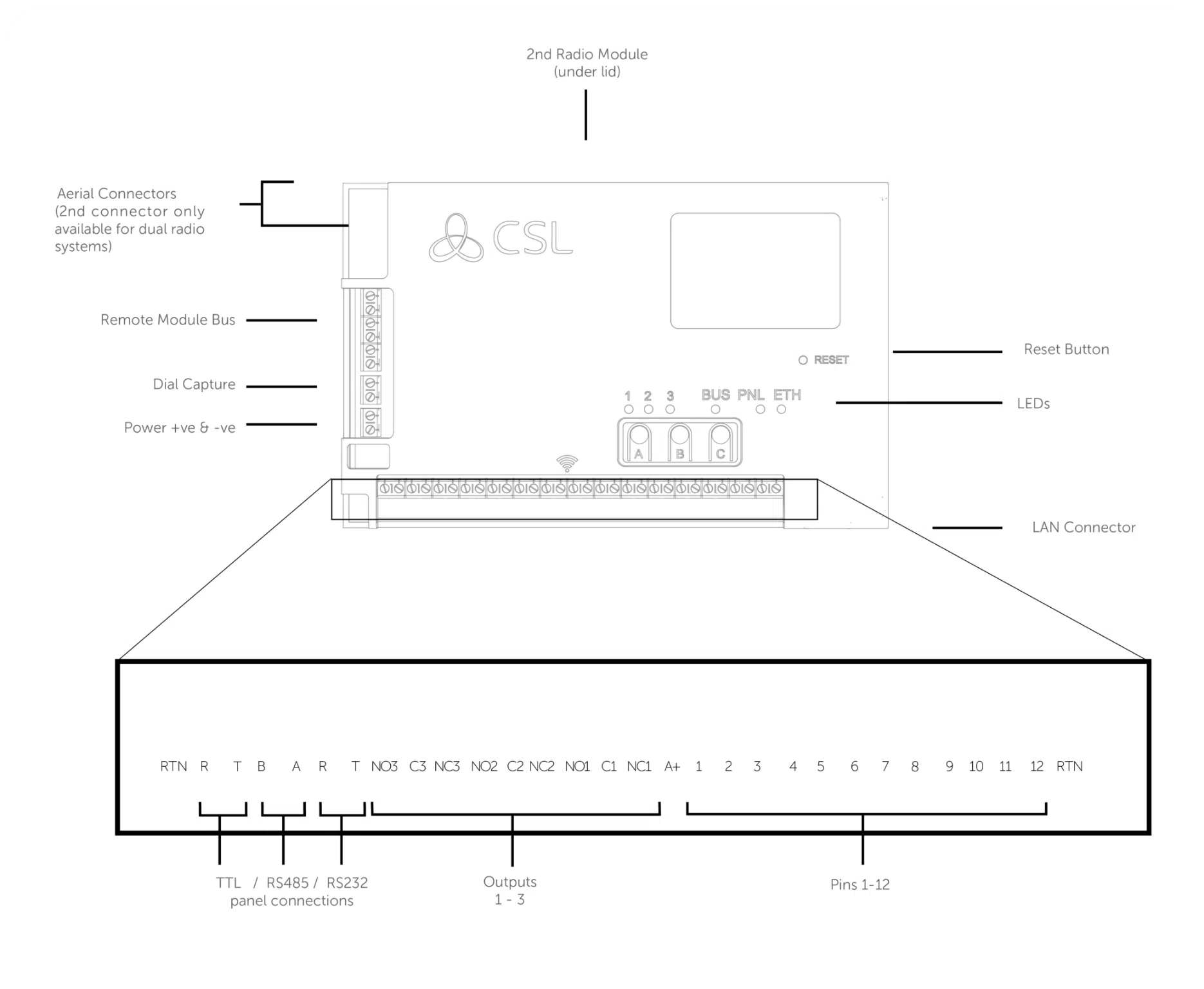
CSL publishes panel guidance for Orisec and lists Orisec among supported serial connection options on DualCom Pro 2.
We advertises monitoring handover as part of its provider switching process and can review supported signalling during the transition.
We install and review compatible CSL alarm signalling for fire and security systems that require managed alarm transmission.
Tell us what you need from your alarm signalling.
Use the form for new CSL signalling, a monitored alarm, a signalling upgrade or a provider handover.